




Semi-Truck vs. Car Accidents
Getting hit by a semi-truck is a fundamentally different event from a car accident, both physically and legally. The liable parties, insurance stakes, and regulatory framework all operate on a completely different scale than a typical two-car collision. If you’ve been injured in one of these crashes, understanding those differences shapes everything about how your legal case gets built and fought.
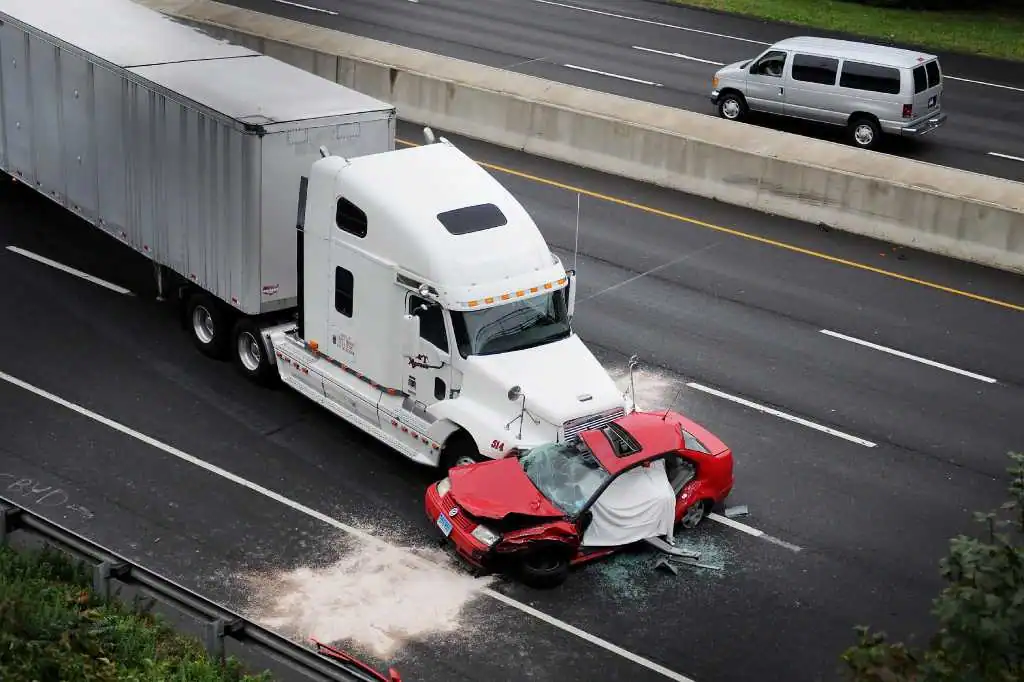
Why Semi-Truck Accidents Are a Different Kind of Crash
Most people instinctively sense that a semi-truck accident is more dangerous than a crash between two passenger vehicles. What often catches people off guard is just how much more complicated the legal side becomes. Yes, the physical destruction is worse and recovery timelines are longer, but the legal complexity comes from somewhere else entirely.
Trucking companies operate as commercial enterprises subject to federal oversight. They carry high-limit insurance policies and deploy experienced defense teams quickly after an accident. Their goal is to close your claim for as little as possible. Understanding what makes a truck accident legally distinct from the start puts you in a far stronger position to fight back.
The Physics Behind the Damage: Weight, Force, and Injury Risk
The sheer physical reality of these crashes is hard to grasp until the numbers are on the table. A fully loaded semi-truck can weigh up to 80,000 pounds. The average passenger car weighs somewhere between 4,000 and 5,000 pounds. That weight difference makes these collisions far more destructive than anything involving two passenger vehicles.
How Size and Stopping Distance Change Everything
A loaded semi-truck traveling at highway speeds cannot stop quickly. Even under ideal conditions, the stopping distance is dramatically longer than for a passenger vehicle, and in wet or icy conditions, that distance extends even further. Combine that with the substantial blind spots surrounding these trucks, and you have a scenario where smaller vehicles can disappear from a driver’s view entirely before impact.
These physical realities directly shape how liability gets assessed. If a trucker failed to account for stopping distance, drove too fast for road conditions, or changed lanes without fully checking blind spots, those facts become central to proving negligence.
Injuries Common in Truck Crashes vs. Car-on-Car Collisions
The force generated in a semi-truck crash translates directly into injury severity. Victims routinely sustain traumatic brain injuries, spinal cord damage, crush injuries, and internal organ trauma. These are not injuries that resolve in a few weeks with rest and physical therapy. They often require surgeries, extended rehabilitation, and long-term medical management, and in the worst cases, they permanently change a person’s life.
Car-on-car collisions more commonly produce soft tissue injuries like whiplash or minor fractures. Those injuries are real and deserve compensation, but the scale of what’s at stake in a truck crash demands a completely different approach to valuing a claim.
A Separate Set of Federal Rules Governs Commercial Trucking
One of the clearest distinctions between truck and car accidents is the regulatory framework surrounding commercial vehicles. Passenger car drivers are subject to state traffic laws. Commercial truck drivers and the companies that employ them are subject to those same state laws, plus an extensive set of federal regulations enforced by the Federal Motor Carrier Safety Administration (FMCSA). Those regulations touch nearly every aspect of trucking operations, and violations can become powerful evidence of negligence.
Hours of Service, Driver Logs, and Fatigue
Driver fatigue is one of the most serious and persistent dangers in the trucking industry. Federal hours-of-service rules exist specifically to limit how long a commercial driver can operate a vehicle before mandatory rest. Drivers must maintain detailed logs documenting their on-duty and driving hours, and violations of those limits are red flags that a driver was operating in a dangerously impaired state when the crash occurred.
In a truck accident where fatigue may be a factor, those driver logs become important evidence. Discrepancies between logged hours and actual driving patterns, or outright violations of service limits, can form the backbone of a negligence claim.
Inspection, Maintenance, and Licensing Requirements
Commercial trucking companies are required to conduct regular inspections and maintain their vehicles according to strict federal standards. Brake failures and tire blowouts often trace back to deferred maintenance or missed inspections, not random mechanical bad luck. When a mechanical failure contributes to a crash, the trucking company’s maintenance records become key to establishing liability.
Commercial driver licensing standards are also considerably more demanding than those for regular motorists. A driver who obtained a license improperly, allowed it to lapse, or was unqualified to operate a specific type of vehicle creates an additional avenue for liability against both the driver and the company that hired them.
How Violations Become Evidence of Negligence
FMCSA regulation violations don’t just demonstrate carelessness. Under Virginia law, a violation of a safety statute can support a finding of negligence per se, where the violation itself serves as evidence of fault rather than something that must be proven separately. Skilled legal representation involves knowing which regulations apply, how to obtain compliance records, and how to present those violations compellingly to a jury or in settlement negotiations. Understanding how FMCSA violations can help your truck accident claim is a key part of building a strong case.
More Parties May Be Liable Than You Expect
A car-on-car collision generally involves two drivers and their respective insurance companies. A truck accident can involve a dramatically wider circle of responsibility, and identifying every potentially liable party is one of the most important tasks in building a strong claim.
Trucking Companies, Cargo Loaders, and Third-Party Contractors
The truck driver is an obvious starting point, but the company that employs that driver may be independently liable for negligent hiring or failure to enforce federal safety rules. If cargo was improperly loaded and that load shifted, causing the driver to lose control, the cargo loader may share liability. If the truck was owned by a leasing company or serviced by a third-party contractor, those parties may also bear responsibility depending on the specific circumstances.
Why Identifying Every Liable Party Affects Your Recovery
Each liable party in a truck accident typically has its own insurance coverage and assets. Pursuing only the driver while missing the trucking company’s liability can significantly limit what a victim ultimately recovers. Thorough investigation from the outset, before parties begin distancing themselves and evidence disappears, is essential to making sure every source of compensation gets identified and pursued.
Commercial Insurance Changes What Is at Stake
Federal regulations require commercial trucks to carry substantially higher insurance minimums than what’s required for personal vehicles. That higher coverage creates the potential for significantly larger recoveries for seriously injured victims.
It also means trucking companies and their insurers have strong financial incentives to contest claims aggressively, minimize injury documentation, and move quickly to shape the narrative before you’ve had a chance to consult an attorney. The same higher stakes that can benefit you also make experienced legal representation all the more important.
Critical Evidence in Truck Cases Has a Short Window
Time is not neutral in truck accident cases. Several categories of evidence that are central to proving what happened begin degrading or disappearing within days or weeks of a crash, and trucking companies are not obligated to preserve them indefinitely unless they receive a formal legal demand to do so.
Electronic Logs, Black Boxes, and Driver Records
Modern commercial trucks are equipped with electronic logging devices (ELDs) and event data recorders, sometimes called black boxes, that capture speed, braking, steering inputs, and GPS location in the moments before a crash. That data can tell a precise story about what the driver did or failed to do. Event data recorder information can be overwritten or lost once a truck is back in service, sometimes within weeks, if no one acts quickly to preserve it. Separately, federal rules require motor carriers to retain electronic logging device records for only six months, after which they may be routinely destroyed.
Beyond the vehicle’s own data, driver qualification files, prior violation records, drug and alcohol testing results, and internal communications within the trucking company may all become relevant. Some of these records are only retained for a legally defined window of time, after which they’re routinely destroyed.
Why Acting Quickly Protects Your Claim
Getting legal representation involved immediately after a truck accident is often what determines whether a case can be fully proven or loses its most important evidence before litigation even begins. An attorney with experience in truck accident cases knows to send preservation letters right away, subpoena electronic data, and retain accident reconstruction experts before the scene is cleaned up and records disappear.
Truck Accident Claims Require Specialized Legal Strategy
The combination of federal regulations, multiple liable parties, high-value insurance policies, and aggressive defense responses means that a truck accident requires a legal approach meaningfully different from handling a standard car crash claim. You need someone who knows FMCSA regulations well, has real experience going up against trucking industry defense attorneys, and has the resources to conduct thorough investigations and bring in credible experts.
Attorneys who handle truck accident cases regularly know that the days immediately after a crash are when evidence is most vulnerable. They also know how to interpret data recorder downloads, depose corporate safety officers, and present complex regulatory evidence to a jury in a way that connects cause to consequence clearly and convincingly.
How Gray Broughton Injury Law Can Help After a Semi-Truck Crash
We’ve built our practice around serious personal injury cases where the stakes are highest and the opposition is most aggressive. Founded in 2018 and based in the Richmond area, our team includes former prosecutors and military veterans who bring courtroom discipline and genuine tenacity to every case we take on.
As Virginia truck accident attorneys, we handle truck accident claims through every stage, whether that means negotiating a full-value settlement or taking the case to trial. We work to preserve critical electronic evidence immediately, identify every liable party, and build cases that hold trucking companies accountable under the federal safety rules they agreed to follow. Our background in prosecution and high-stakes litigation means we understand how defense teams think, and how to stay one step ahead.
If you or a family member has been injured in a truck accident in Richmond or Northern Virginia, you can reach us at 804-669-9899 or visit our office at 1602 Rolling Hills Drive, Suite 212, Henrico, VA 23229. Consultations are free, and you pay nothing unless we win your case.
Disclaimer: This article is for general informational purposes only and does not constitute legal advice. Truck accident cases turn on federal regulations and facts specific to each crash, and laws change over time. For advice about your situation, contact Gray Broughton Injury Law or another licensed Virginia attorney.

